
Stop shrinking to fit places you have outgrown.
“Furaya Joyce”
Part One: On Education, Ego, and the Myth of the “Perfect Wife”
I come from a society where many men are still struggling to accept one simple truth: a woman’s education — even higher education, a Master’s degree and beyond — does not cancel her ability to be a good wife and a good mother.
I grew up in a family of six children: five girls and one boy. And like in many African homes, the way chores were shared was never really a discussion. All responsibilities related to cooking, cleaning, and taking care of the house were automatically assigned to my sisters and me. My brother, on the other hand, carried only one responsibility: the invisible crown of being “the man of the house.”
This arrangement is a perfect reflection of many African households.
Regardless of how educated both genders are, the girl child is often groomed for marriage as a homemaker, while the boy child is groomed to be a provider. Because of this orientation, many men grow up believing that a “stay-at-home” woman is automatically better wife material.
Interestingly, I have come to realize that this way of thinking is not exclusive to African men. Some European, Asian, and other men still live by this same old-school ideology.
At first, these were just stories — stories of men who said they would prefer a “stay-at-home” woman when they were ready to settle down.
Then it became more personal.
Here in Germany, I’ve had close friends openly tell me that when they’re ready for marriage, they’ll go back to Africa to “find a good local girl.” In their defense, local girls are “well-behaved and easy to control” — as opposed to the educated “demons” (yes, that was the word used). According to them, the local girl would make a better wife.
At the time, I was indifferent to this school of thought. People are free to think and choose what they want. If a man feels that a local girl is what he needs, then that is his right.
Or maybe I was indifferent because I had not yet been labeled “a bad wife in the making” simply because I am educated and pursuing higher education.
At least not until that fateful day on a date with Tim — a handsome, educated German.
What he said to me at the end of what I thought was a wonderful date completely changed my neutral stance on this entire ideology.
Let me be very clear: I am not saying that “local girls” or “stay-at-home” women cannot build good homes. That is not my argument at all.
My argument is this: a woman being educated, informed, and exposed does not take away her ability to be a good wife and a good mother.
Choosing one woman over another simply because you believe one is “too exposed” and therefore will not feed your ego or submit to your need to feel like “the head of the house” is a painfully shallow way of thinking.
Many men fail to realize that “Head of the House” is not a title you are automatically entitled to. It is a role you earn through responsibility, character, emotional intelligence, and partnership.
Some men would literally abandon their educated, supportive girlfriends when they’re ready for marriage and travel to the middle of nowhere just to find a woman they believe will make them feel like “the man of the house.”
Sometimes I joke and say: if “Head of the House” were an option on official forms, some men would proudly tick it under “Title” — not as a responsibility, but as an identity.
And no — this is not about all men. It is simply an observation.
For the longest time, I thought all of this was just theory. Just conversations. Just other people’s choices.
Until one evening, over coffee, in a quiet café in Germany, with a man named Tim.
That was the night this ideology stopped being a discussion and became personal.
That was the night I was told, very calmly and very confidently, that I was “too bold.”
And that was the beginning of a story I didn’t know I was about to tell.
To be continued…
Because as always — it’s #mythoughtsyourmind.
The Quiet Cage: Why Some Women Learn to Shrink Themselves
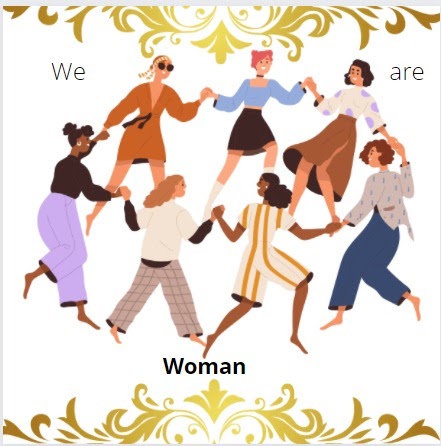
Over centuries, women have fought to be seen, to be heard, and to be included — not as decorations in society, but as full human beings with minds, ambitions, and agency.
And while the fight for women’s rights is still very much a work in progress, there is a quieter, more complicated reality we don’t talk about enough: there are still many women who have made peace with the cages society built for them.
Not because they are incapable of more.
Not because they lack intelligence, potential, or ambition.
But because they have lived too long inside definitions that were never written by them.
When a society tells a woman, from childhood, that her highest achievement is to be chosen, to serve, to shrink, to submit, and to stay small, some women eventually stop questioning it. They begin to believe that the place they were assigned is the place they belong.
This is how limitations become tradition.
This is how potential is negotiated away.
This is how brilliance is softened into “good behavior.”
In Part One of this story, I talked about how girls are groomed for domesticity while boys are groomed for authority — how the idea of the “perfect wife” is often designed around comfort for male ego, not around partnership. In Part Two, I told you about the night a man looked at me and said I was “too bold” — as if confidence in a woman is a defect, as if self-awareness is something to apologize for.
That moment wasn’t really about me. It was about a system that still finds empowered women inconvenient.
The truth is: rights on paper mean nothing if the minds that are meant to use them are still in chains.
That is why the work cannot only be about fighting systems. It also has to be about waking each other up.
Today, I want to encourage you to open your network of women. Let other women see what is possible through you. Let your life be evidence that there are many ways to exist, many ways to succeed, many ways to be a woman.
While some women are out there fighting to create more space, you and I must make sure that when that space exists, there are women who are mentally ready to occupy it.
Because empowerment is not only about access.
It is also about permission.
And sometimes, the permission a woman needs most is the one she gives herself — after seeing another woman dare to live differently.
So let’s be visible. Let’s be loud about our possibilities. Let’s be living contradictions to the boxes we were given.
Because the most dangerous thing to any limiting system is not a protest.
It is a woman who has seen another way to live — and decided to take it.
#womensupportingwomen #possibilities #inclusion
A personal story about dating, ego, and the moment I realized confidence is threatening to the wrong men.
It has been a while since I published my last piece. Somehow, this Covid-19 period has turned out to be far less inspiring than I expected. Nevertheless, I promised in my previous post to continue the gist about my date night with Tim. So I hope you’re reading this with a glass of something in hand (I’d recommend a glass of Merlot—it goes down perfectly with good gist) while I walk you through that evening.
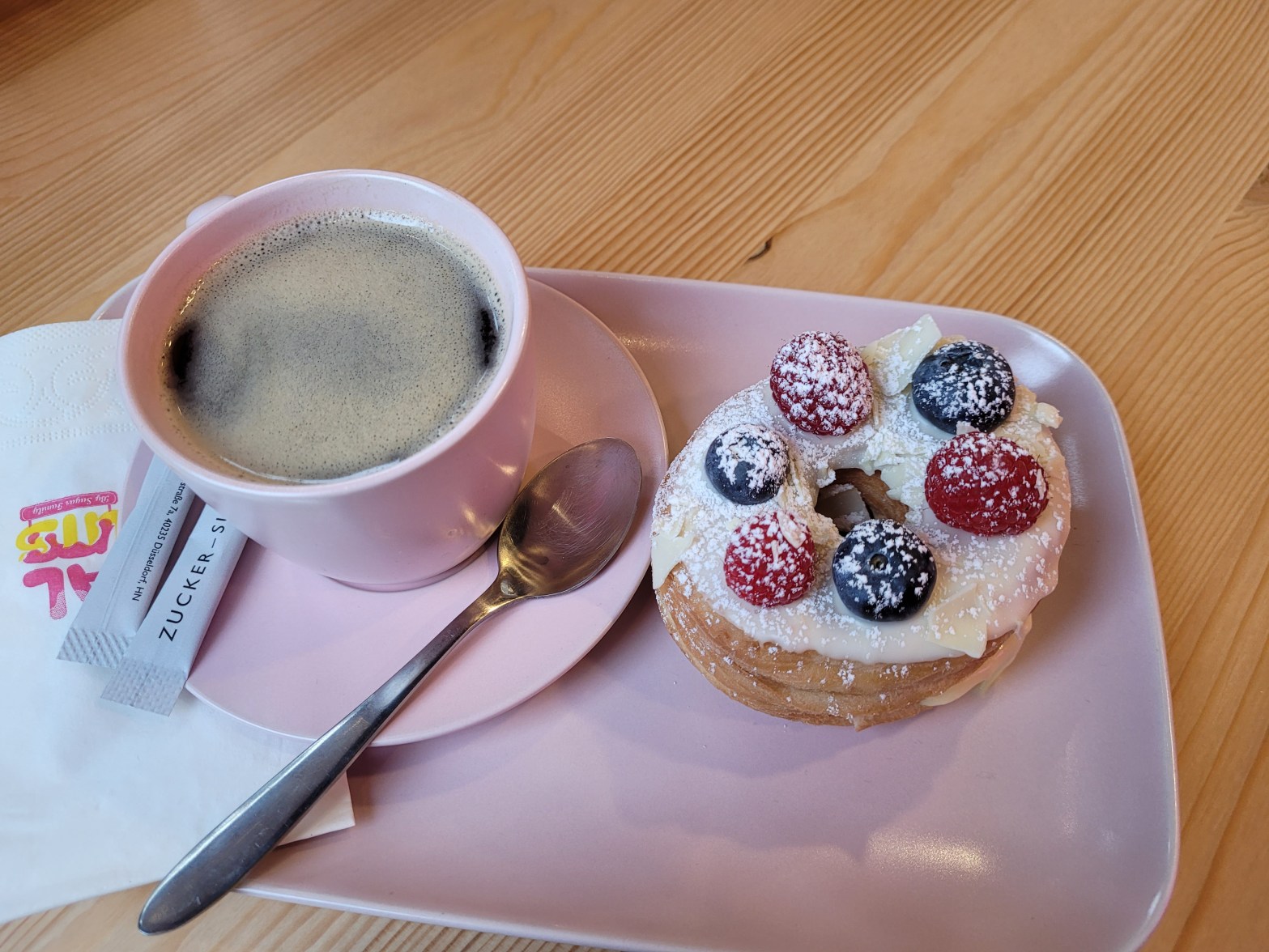
When we arrived at the coffee parlor where we had agreed to meet, we hugged and both took off our jackets. As I slipped mine off, my mind wandered back to that first hug—the feeling of his ribs through our jackets was still lingering in my thoughts. The waitress walked over and handed us the menu brochure, filled with fancy German names. I quickly uttered a few words in German and ordered black coffee without sugar. He ordered the same but with sugar and milk. Clearly, he needed some high-fat-content milk, I thought to myself. Before you give me that judgmental look, remember I said I could feel his ribs through his jacket—well!
That was how the evening began, until we somehow found ourselves in a situation that felt like we were on the “Brain Box” show. Brain Box is a popular show in Cameroon where primary and secondary schools are represented by their brightest students in a quiz competition. The team with the most correct answers goes home with the highest points. The only difference between Brain Box and Tim’s little game of pride—as I came to think of it—was that his rules were reversed.
He would bring up a topic, fully expecting me to be clueless about it. If I wasn’t, we’d move on to the next topic, and the next, and the next. This went on for a while until, out of frustration, poor Tim finally called my name to get my attention and then said a string of words that left me speechless for almost a full minute.
For a moment, I could have sworn we had time-traveled to the 1920s. But that couldn’t be possible—Juju’s “Hi Babe” was playing in the background, and she’s a 21st-century German singer. So maybe it was just a brief hallucination, I thought.
To be sure, I leaned forward, placed my right hand over my left as if checking my pulse, and dug my fingernails into my skin. I fought through the pain and asked him to repeat what he had just said. This time, the pain convinced me I wasn’t hallucinating. Everything was real.
Tim leaned back in his chair, placed his left hand on the table and his right at his side, like someone who had just thrown their last card in an UNO game, and said, “You are too bold for my liking.”
Yes. Those were exactly the same words.
For a moment, I forgot about what he meant and simply celebrated the fact that I wasn’t hallucinating. I could hear myself say, “Yes! I knew it!” I’m not sure if I said it out loud, but judging from the look on his face, I probably did—because he looked completely confused. And honestly, he had every right to be. “Yes, I knew it” is not exactly the response one expects to “you are too bold for my liking.”
Then it hit me.
“Wait a minute,” I said. “Did you just say I’m too bold for your liking?”
That question seemed to confuse him even more. I could see it all over his face, but I couldn’t understand why. And that was the moment it became crystal clear to me:
Tim is a male chauvinist.
The gist of how I reacted after that definitely deserves another glass of wine.
Once I refill, we’ll continue. But for now, what’s your take on male and female chauvinists? Do you agree with me that they’re worse than sexists?
Let’s talk!
Because as always — it’s #mythoughtsyourmind.
Welcome to my Blog
Thanks for visiting this page, I hope and wish you have a satisfying and memorable time here. Remain Blessed🤗
The Journey Begins
Thanks for joining me!
Good company in a journey makes the way seem shorter. — Izaak Walton

 A 21st Century Woman: What it Means.